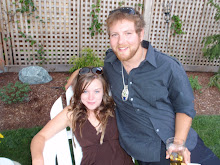
After our whirlwind tour of Cambodia, we hopped a 14 hour bus ride towards Vietnam. The length of the ride sounds more painful than it actually was. Everything went smoothly though crossing the boarder into Vietnam has been the most vigours and time consuming yet! Our entire bus was held up for over an hour because one guy set of the medical heat sensors that screen our body tempratures. The swine flu scare adds at least 20 minutes to each point of entry as hoards of people scramble to find pens to fill out the health cards that nobody ever checks. We arrived in Ho Chi Min city (Siagon) a bit late, but got a room complete with air con and satalite TV. TV proves to be one of the biggest money savers as it entertains for free rather than racking up a bar tab(well...that was before we discovered "Fresh Beer": one jug that fills three glasses costs under a dollar). We splurged that night on buy 2 get on free cocktails, made a delightful new friend, and stayed out till 2 am after discovering the little street cafes with cheaper beers.
The next day of sight seeing matched the pace of Saigon. We ate the usual pho breakfast and headed for the Ben Thanh Market. Quite accustomed to people hollaring "You buy something?" as we walk down the street, we weren't ready for people actually grabbing your sweaty arms as you try to navigate through the narrow stalls of the Vietnamese markets. We've found the Vietnamese people to be VERY hands on. Lots of arm stroking, cheek pinching, arms over your unbelieveably sweaty shoulders, and even the occaisional butt spank if you've established at least a 5 minute relationship. After the market, we meandered our way to the Fine Arts museum and the Museum of Ho Shi Minh City. Most of the museums feature a least a couple rooms dedicated to Vietnams fight for independence. A very eye-opening experience for two Americans. The Vietnam War wasn't covered much in the generalized history classes of high-school, especailly not from the Vietnamese perspective. We stopped for a lunch of clams steamed in lemon grass, noodles, and a yummy dessert that consisted of multiple colored jellies, condensed milk and ice cubes. After lunch, we toured the retro-style Reunification palace which has been preserved in it's late 70's form complete with circle couches and padded doors. Our last stop of the day was the War Remnants Muesum. As humbling as the S-21 prision we visited in Cambodia, this museum displays pictures and first hand accounts of the atrocities committed in Vietnam during the late 70s. The stories are heart breaking and the brutality seems unreal. One photo exhibit shows pictures of people born (as recently as 2008) in Veitnam with severe birth defects and a wide range of bizarre diseases. They are people from communities where the U.S. used Agent Orange. On the door leaving the exhibit there is a post citing the U.S. supreme courts denial of the direct link between Agent Orange and the negative side effects that plague 3 million people in Vietnam. It was dated July 2009. We were kicked out of the museum at closing time and walked silently home until we ran into a friend and went for fresh beers to help digest what we learned. Our night ended early in the comforts of our aircon room with Animal Planet on the tube.
The next day we woke early, enojyed some pho, walked the market, updated the blog, drank some more fresh beer, got ripped off by a fixed meter in a cab, and boarded an over night train to Hoi An via Danang. We booked the top bunk soft sleepers with air con and shared our 4 bed berth with two elderly Vietnamese men. They were very nice, always smiling up at us and throwing Leon's sheet back on him when he kicked it off in his sleep. Unfortunetly, the language barrier limited us to hellos and a hearty handshake goodbye. From the train station, we pushed through the crowd of taxi drivers that wait at every (so far) Vietnamese train station 24 hrs a day descending upon the tourists the second they leave the secured boarding platform. We avoided the severe over charging and caught a shuttle bus toward Hoi An.
We stayed at a lovely hotel (with a pool!) for three days and four nights. Where Siagon was loud and crazy, Hoi An was comparatively cool (in the shade or the pool) and calm. A lot of structures in major cities were destroyed by bombs in the Vietnam War, but luckily Hoi An maintains the beautiful colonial buildings that were built under French rule. The nights in Hoi An are best spent wondering along the river and admiring the old buildings lit up by soft Veitnamese lanterns. I'm not sure if anyone who visits Hoi An manages to leave without a hand-tailored garment. The streets are lined with tailors and all you have to do is bring in a picture of what ever you want, and they will replicate it. We may have got a little carried away with the novelty of hand tailored clothing-the evidence should be arriving on my doorstep in Bellingham within a couple of weeks. We did manage to do some sight seeing between fittings, more like man-handleings by the main seamstress. The old quarter of the city is cut off to cars and motor bikes which makes for great window shopping. Everynight after our afternoon swim we would eat at Cafe 43. Delicious local dishes include: White Rose (amazing little pork wontons dipped in sweet chilli sauce), fish grilled in banana leaf, cao lau (doughy noodles which can ONLY be made in Hoi An as they require water from a specific local well), banh xeo (thin crispy rice paper spring rolls), and of course: fresh beer. We managed to pull ourselves out of town on a 5km bike ride to Cua Dai beach complete with palm trees, white sand, and turquoise water.
After a few days of relaxing, we took the scenic bus ride along the coast and through the hills to Hue. With only an afternoon and a morning to explore, we got down to buisness by getting lost in an effort to enojoy a delicious Japanese meal from a restaruant that trains street kids to work in the hospitality industry. The next day we got up early to bike to the citidel whose walls still encompass most of the city. Biking in Vietnam is...an experience. Slow and Steady wins the race. As motor bikes and cars whiz around you, everyone honks to indicate they are either going to turn or pass you. Sometimes people honk just to let you know they are very close behind you. You take comfort in knowing that at least the big vehilcles (cars and buses) mind the traffic lights. If you want to merge, you stick out your hand and make a motion as if you are fanning the motorcyclclist next to you, and then you just slowly drift over. You must go slow to give the motor bikes time to swerve around you. After awhile, you get the hang of it and trust that everyone else is going to try to avoid hitting you. The citadel was alomst worth the near death experience of biking there. It housed Vietnamese royalty until 1945. In 1968 Hue was the sight of the bloodiest battles of the Tet Offensive. Bombing destroyed a lot of structures and the typhoon that passed through in the 1980s didn't help with rebuilding efforts. Even though many of the buiildings are under reconstruction, the completed temples were very interesting and the grounds were beautiful. We spent a good three hours at the citadel and spent the rest of the morning biking through the modern neighborhoods. At 3:30pm we boarded another overnight train to Hanoi where we are gearing up for our 3 day/2 night tour of Halong Bay.
Friday, August 21, 2009

Sunday, August 16, 2009
Cambodia
After spending a couple of days in our favorite part of Bangkok, eating at our favorite street stall and relaxing in a nice A/C room the time came to hop a plane to Cambodia.
The flight from Bangkok to Cambodia was short and painless, clocking in at a little over an hour. We arrived in Phnom Penh and got into a taxi and headed off to the little district of guest houses by the lake. The situation with the lake is very interesting. Apparently the lake has been sold to a company that is choosing to fill in the lake, presumably for building something on top of it. So, instead of having a nice brackish lake to look at, instead we had a great view of a giant pipe spewing muddy water and bulldozers. However, there were some definite highlights to the city. Compared to other cities, Phnom Penh is very clean, and the people do not drive like complete maniacs. Also, the automobiles there have the steering wheel on the left side of the car, like we have in the states, where as the rest of the countries we had been to, the steering wheel was on the right side. It is a small insignificant detail, but different that what we had become accustomed to.
While in Phnom Penh, we went to a large temple in the city center. The temple was very cool, and on top of a hill. All around the temple there were little macaques running around and people vending all sorts of goods from food to scarves. There was also an elephant that you could get take pictures with, or take a ride on. We also went to the Tuol Sleng Genocide Museum. This was a very humbling experience. Tuol Sleng used to be a secondary school in Phnom Penh, but after the Khmer Rouge took over and completely evacuated the entire city, this school became a detention center known as S-21. The Khmer Rouge was a ruthless dictatorship in Cambodia that ruled from 1975-1979. For those of you familiar with the atrocities of the Khmer Rouge, you will know about the photographs. Throughout the Museum there are photos of the people brought into detention center for interrogation. The photos are very eerie because you know that none of the survived. If they were brought to S-21, it was a veritable death sentence. The photos were of 3 year old kids all the way to 60+ year old men and women. Some of the people clearly had been beaten, and if they weren't mashed up, they had terrified looks on their faces. The "official" count of prisoners at S-21 was about 10,000 but the museum estimates that 20,000 people or more passed through and only 7 survived. This was a very sobering and grounding experience, but necessary to understand the recent history of Cambodia and the people's national psyche. After 2 days in Phnom Penh, it was time to head off to Angkor Wat.
For those of you who don't know, Angkor Wat is the 8th wonder of the world, though it should be the 1st because it is utterly amazing. The temples were built between the 8th and 13th century and display a variety of styles. The temples served as religious centers for both Buddhists and Hindus. Angkor Wat has both Buddha statues and large bas-reliefs that depict different Hindu stories.
Each day we went to see different temples, and rest assured we took hundreds of photos of our experiences there. On our first day we decided to do the Grand Tour. This is the route around the outside of the temples. We saw Banteay Kdei, Pre Rup, East Meabon and Ta Som. The first day we spent about 6 hours walking around and exploring the temples. One of the neat things about Angkor is that tourists are allowed to explore all over the temples. Only a few of them have "restricted" areas where you can not go. This increased our experience there because we had access to so many different parts of temples. You could touch the faces of the bas-reliefs on the walls and feel the texture of the carved pillars.
The second day we opted to wake up very, very early and go and watch the sunrise at Angkor Wat itself. The idea was romantic and cool, but the sun didn't really provide a very memorable rise. However, the same can not be said about Angkor Wat itself. This is the temple that the entire place is named for. Just to clarify, Angkor Wat is a specific temple, but the entire area is called Angkor Wat too. There are many different, separate temples all around the entire area. But I digress...So, Angkor Wat has these amazing spires that rise up, and a labyrinth of halls and rooms. The entire temple is surrounded by a gigantic moat and you walk along this amazing bridge to entire the temple. According to our little guide book, Angkor Wat is the largest religious temple in the world. Angkor also once housed a hall of a thousand Buddha's as well as the amazing bas-reliefs telling the Hindu stories. One thing that I found very interesting about Angkor was the fact that nearly every inch of the temple was adorned with some kind of carving or relief or something decorative, with the exceptions of the steps and most of the ceilings, Another highlight from the second day was Bayon. This is the style of temple that people (I think) typically associate with Angkor Wat. This temple has a bunch of different spires, and each spire has four giant faces carved into it. We were able to climb all the way to the top of this temple and walk around. This was one of the highlights for the our second day. As you drive up to the temple all you see are this giant faces everyhere, and when you get up to the actual temple, you see so much more detail too. Like Angkor, there are reliefs and carvings all over the temple and they are all shadowed by the giant beatifically smiling faces. I can say over and over again how amazing they were, but until you see them with your own eyes, no picture does them justice.
The last day of our trip in Angkor found us at Preah Kahn. This temple is a sort of experiment. The different groups in charge of maintaining and restoring Angkor have deemed Preah Kahn to be left in its original state after being discovered. Though they have done some work there, they have not done nearly as much as at any of the other temples. The roofs that have caved in are not being restored and the the trees growing within the temple are not being removed. For those of you who saw last months cover of National Geographic with the monk at Angkor, it was taken in Preah Kahn, and Jessie and I also got our photo taken there. What makes this temple so unique is the fact that it is not going to be restored. The caretakers have put up supporting beams in certain areas and very few tree have been taken out for safety purposes, but other than that this temple is still in the condition it was when it was discovered. One of the things that distinguishes this temple are the enormous trees growing on the walls and their roots pushing coming down. The picture of the monk on NatGeo truly characterizes what a lot of the trees are doing around the temple. All in all, this temple was in the top 3 experiences of all of Angkor Wat.
I could go on and on for days about Cambodia and Angkor, but it will have to wait for another blog, or another day. Right now we are in Ho Chi Min City aka Saigon and getting ready to hop a train to Danang. We will update again when we get the chance!
The flight from Bangkok to Cambodia was short and painless, clocking in at a little over an hour. We arrived in Phnom Penh and got into a taxi and headed off to the little district of guest houses by the lake. The situation with the lake is very interesting. Apparently the lake has been sold to a company that is choosing to fill in the lake, presumably for building something on top of it. So, instead of having a nice brackish lake to look at, instead we had a great view of a giant pipe spewing muddy water and bulldozers. However, there were some definite highlights to the city. Compared to other cities, Phnom Penh is very clean, and the people do not drive like complete maniacs. Also, the automobiles there have the steering wheel on the left side of the car, like we have in the states, where as the rest of the countries we had been to, the steering wheel was on the right side. It is a small insignificant detail, but different that what we had become accustomed to.
While in Phnom Penh, we went to a large temple in the city center. The temple was very cool, and on top of a hill. All around the temple there were little macaques running around and people vending all sorts of goods from food to scarves. There was also an elephant that you could get take pictures with, or take a ride on. We also went to the Tuol Sleng Genocide Museum. This was a very humbling experience. Tuol Sleng used to be a secondary school in Phnom Penh, but after the Khmer Rouge took over and completely evacuated the entire city, this school became a detention center known as S-21. The Khmer Rouge was a ruthless dictatorship in Cambodia that ruled from 1975-1979. For those of you familiar with the atrocities of the Khmer Rouge, you will know about the photographs. Throughout the Museum there are photos of the people brought into detention center for interrogation. The photos are very eerie because you know that none of the survived. If they were brought to S-21, it was a veritable death sentence. The photos were of 3 year old kids all the way to 60+ year old men and women. Some of the people clearly had been beaten, and if they weren't mashed up, they had terrified looks on their faces. The "official" count of prisoners at S-21 was about 10,000 but the museum estimates that 20,000 people or more passed through and only 7 survived. This was a very sobering and grounding experience, but necessary to understand the recent history of Cambodia and the people's national psyche. After 2 days in Phnom Penh, it was time to head off to Angkor Wat.
For those of you who don't know, Angkor Wat is the 8th wonder of the world, though it should be the 1st because it is utterly amazing. The temples were built between the 8th and 13th century and display a variety of styles. The temples served as religious centers for both Buddhists and Hindus. Angkor Wat has both Buddha statues and large bas-reliefs that depict different Hindu stories.
Each day we went to see different temples, and rest assured we took hundreds of photos of our experiences there. On our first day we decided to do the Grand Tour. This is the route around the outside of the temples. We saw Banteay Kdei, Pre Rup, East Meabon and Ta Som. The first day we spent about 6 hours walking around and exploring the temples. One of the neat things about Angkor is that tourists are allowed to explore all over the temples. Only a few of them have "restricted" areas where you can not go. This increased our experience there because we had access to so many different parts of temples. You could touch the faces of the bas-reliefs on the walls and feel the texture of the carved pillars.
The second day we opted to wake up very, very early and go and watch the sunrise at Angkor Wat itself. The idea was romantic and cool, but the sun didn't really provide a very memorable rise. However, the same can not be said about Angkor Wat itself. This is the temple that the entire place is named for. Just to clarify, Angkor Wat is a specific temple, but the entire area is called Angkor Wat too. There are many different, separate temples all around the entire area. But I digress...So, Angkor Wat has these amazing spires that rise up, and a labyrinth of halls and rooms. The entire temple is surrounded by a gigantic moat and you walk along this amazing bridge to entire the temple. According to our little guide book, Angkor Wat is the largest religious temple in the world. Angkor also once housed a hall of a thousand Buddha's as well as the amazing bas-reliefs telling the Hindu stories. One thing that I found very interesting about Angkor was the fact that nearly every inch of the temple was adorned with some kind of carving or relief or something decorative, with the exceptions of the steps and most of the ceilings, Another highlight from the second day was Bayon. This is the style of temple that people (I think) typically associate with Angkor Wat. This temple has a bunch of different spires, and each spire has four giant faces carved into it. We were able to climb all the way to the top of this temple and walk around. This was one of the highlights for the our second day. As you drive up to the temple all you see are this giant faces everyhere, and when you get up to the actual temple, you see so much more detail too. Like Angkor, there are reliefs and carvings all over the temple and they are all shadowed by the giant beatifically smiling faces. I can say over and over again how amazing they were, but until you see them with your own eyes, no picture does them justice.
The last day of our trip in Angkor found us at Preah Kahn. This temple is a sort of experiment. The different groups in charge of maintaining and restoring Angkor have deemed Preah Kahn to be left in its original state after being discovered. Though they have done some work there, they have not done nearly as much as at any of the other temples. The roofs that have caved in are not being restored and the the trees growing within the temple are not being removed. For those of you who saw last months cover of National Geographic with the monk at Angkor, it was taken in Preah Kahn, and Jessie and I also got our photo taken there. What makes this temple so unique is the fact that it is not going to be restored. The caretakers have put up supporting beams in certain areas and very few tree have been taken out for safety purposes, but other than that this temple is still in the condition it was when it was discovered. One of the things that distinguishes this temple are the enormous trees growing on the walls and their roots pushing coming down. The picture of the monk on NatGeo truly characterizes what a lot of the trees are doing around the temple. All in all, this temple was in the top 3 experiences of all of Angkor Wat.
I could go on and on for days about Cambodia and Angkor, but it will have to wait for another blog, or another day. Right now we are in Ho Chi Min City aka Saigon and getting ready to hop a train to Danang. We will update again when we get the chance!
Penang and Ko Pan-Ngan
The little that we saw of Malaysia was beautiful. George town in Penang is a beautiful colonial town know for the delicious mix of Chinese, Malay, and Indian food. We followed the historical walk that makes George town a Unesco World Heritage Site, checked out some cool Hindu and Buddhist temples, even tried betel nut (a lot of spices rolled up in a leaf that you chew up till it gets mushy and you store in your lip to get a buzz...interesting taste and it makes your spit bright red). To get a full view of the city we took a trolley 800 meters up Penang hill. Little did we know that this excursion would involve holding a Malaysian squirrel at the menagerie and refusing to hold the large snake directly afterword. Though the little ground keeper reassured us the snake wouldn't bite by pressing the snakes mouth against his cheek, we were a little nervous as our hands reeked of snake food (i.e. squirrel).
After a couple days of wondering the city and eating everything in sight, we caught a bus back to Thailand. We were prepared for a relatively uneventful journey until a very drunk (maybe high) kid plopped himself into our mivivan. He was the entertainment for the journey to the boarder as he continued to chug beers (he even gave one to Leon as collateral for borrowing an ipod so he could dance in his seat). He would holler out the window at the Thais vending at stop lights. They would come up to the window to try and sell him something and he would quickly embrace the tiny surprised man and hold him close till it became obvious that the man wanted to get away. There was a period of about five minutes in which he held onto my hand clearly wanting to share his enjoyment of the music in his head phones with someone. When it was time to switch buses, he stumbled out and we never saw him again. Jacque Neils was only in our lives for about 5 hours, but we will never forget him.
The rest of our journey was long and uneventful. For whatever reason, when you want to get from one location to another in Thailand, you will be shuffled into anywhere between 3-5 mini vans and buses, lingering briefly (for no apparent reason) at little offices until your next van shows up to take you about 3 blocks away to wait again. Our final destination made the 14 hours of travel worth it.
We checked into a little bungalow on Ko Pan-Ngan. For 12 dollars a night we had a nice room with a front porch complete with a hammock overlooking the sea. There was a sweet swimming pool and a bar just a few steps away. We ended up relaxing for almost a full week. Sun bathing, swimming, reading, and exploring dried up waterfalls by motor bike. Life is very easy when you have nothing to do. We had to pry ourselves away from this beautiful place as it began to fill up with full moon party people (once a month there is a huge full moon party which means all the quiet little resorts fill up with 18 year old sloppy drunks and the prices sky rocket). We took the most luxurious over night bus back to Bangkok to catch a plane for Cambodia. More is soon to come!
After a couple days of wondering the city and eating everything in sight, we caught a bus back to Thailand. We were prepared for a relatively uneventful journey until a very drunk (maybe high) kid plopped himself into our mivivan. He was the entertainment for the journey to the boarder as he continued to chug beers (he even gave one to Leon as collateral for borrowing an ipod so he could dance in his seat). He would holler out the window at the Thais vending at stop lights. They would come up to the window to try and sell him something and he would quickly embrace the tiny surprised man and hold him close till it became obvious that the man wanted to get away. There was a period of about five minutes in which he held onto my hand clearly wanting to share his enjoyment of the music in his head phones with someone. When it was time to switch buses, he stumbled out and we never saw him again. Jacque Neils was only in our lives for about 5 hours, but we will never forget him.
The rest of our journey was long and uneventful. For whatever reason, when you want to get from one location to another in Thailand, you will be shuffled into anywhere between 3-5 mini vans and buses, lingering briefly (for no apparent reason) at little offices until your next van shows up to take you about 3 blocks away to wait again. Our final destination made the 14 hours of travel worth it.
We checked into a little bungalow on Ko Pan-Ngan. For 12 dollars a night we had a nice room with a front porch complete with a hammock overlooking the sea. There was a sweet swimming pool and a bar just a few steps away. We ended up relaxing for almost a full week. Sun bathing, swimming, reading, and exploring dried up waterfalls by motor bike. Life is very easy when you have nothing to do. We had to pry ourselves away from this beautiful place as it began to fill up with full moon party people (once a month there is a huge full moon party which means all the quiet little resorts fill up with 18 year old sloppy drunks and the prices sky rocket). We took the most luxurious over night bus back to Bangkok to catch a plane for Cambodia. More is soon to come!
Subscribe to:
Comments (Atom)